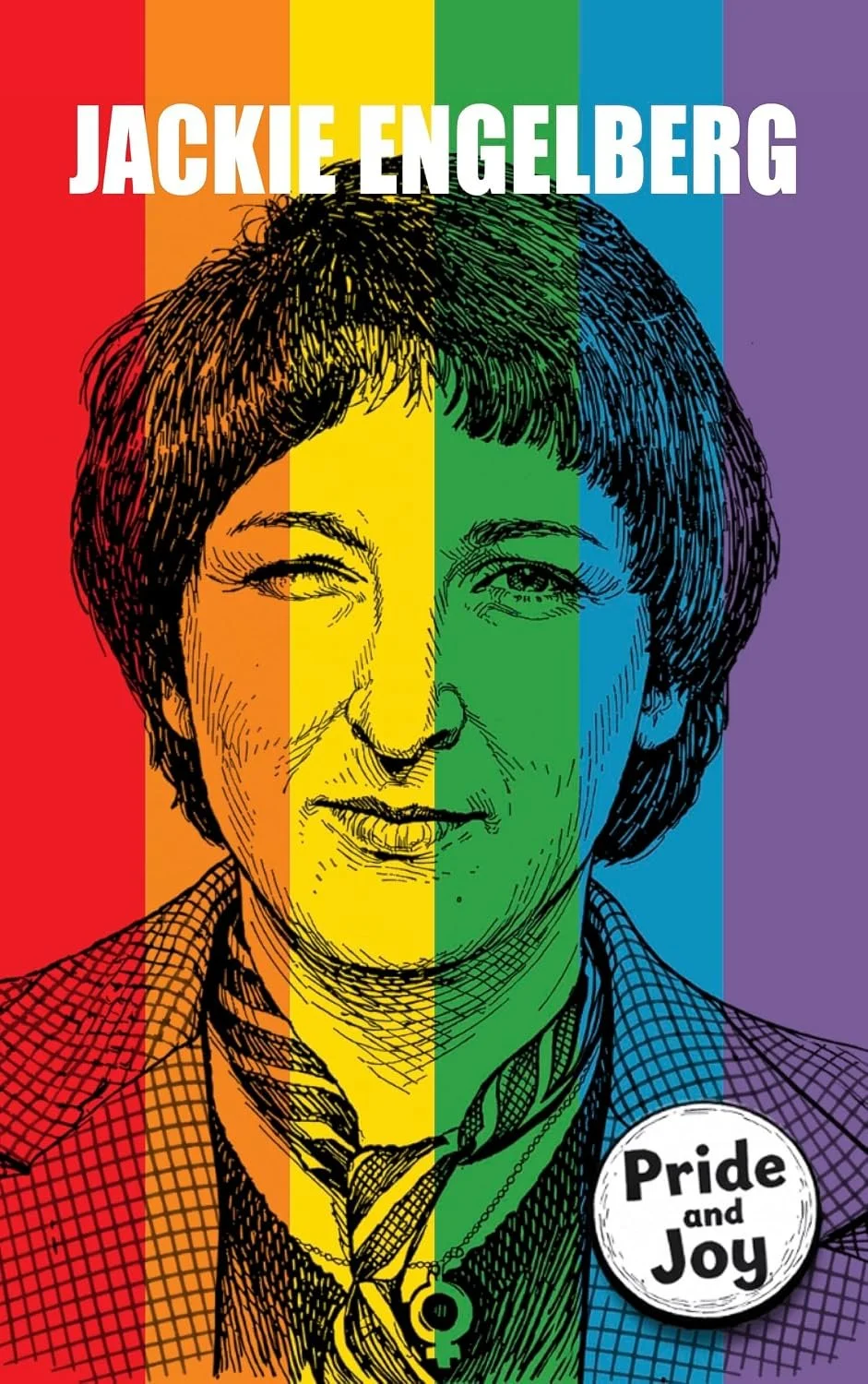
Jackie Engelberg: Pride and Joy
In this interview with Proud 2 b Parents, author Jackie Engelberg discusses her novel Pride and Joy, a story of love, family and LGBTQ+ history set against the backdrop of 1970s and 1980s Britain. Drawing on her own experiences as a lesbian mother, Jackie reflects on the challenges faced by LGBTQ+ families during a time of widespread discrimination, the AIDS crisis and Section 28, and shares why she felt compelled to preserve the stories and struggles of earlier generations for those who come next.
1. WHAT IS THIS BOOK ABOUT?
Pride and Joy is about two women who meet, fall in love and decide that they
want to have children together. It is set in 1980s London, a time when the
LGBTQ+ community were facing the worse possible challenges: the AIDS
pandemic, Thatcher’s Section 28 and lesbians losing custody of their children
as a result of the homophobic UK courts.
2. IS THIS YOUR STORY?
No. Pride and Joy is a work of fiction. However, it is drawn from my lived
experiences. I came out over 50 years ago and I have lived through huge
changes for our community, both in respect of legislation as well as societal
attitudes. I am a lesbian mother with two sons: my biological son, now 33, and
my partner’s child who is 41 years old. My partner died when her son was 9
years old. My sons were a result of both anonymous and known donor
insemination.
3. I BELIEVE ONE SCENE IS BASED ON YOUR PERSONAL EXPERIENCE
Yes. I came out to my mother in 1975 and it remains a very vivid memory. I
definitely draw on a lot of details from this experience that feature in the book.
This includes the setting and one particular comment she made – I won’t be a
grandmother by you. This had a profound impact on me. It was 18 years later
that I had my son. My mother was delighted to have become a grandmother
by me!
4. WHY DID YOU SET IT IN THE 70’S AND 80’S?
For many reasons. Mainly because these were the decades that spanned my
personal journey to motherhood, from my coming out in 1975 and my
assumption that as a lesbian I wouldn’t become a mother, to the birth of my
son in 1993. In the 70s the homophobic beliefs deemed that lesbians were not
real women and were not fit to be mothers. Lesbian mothers were losing
custody of their children as a result of decisions taken by the homophobic UK
courts. This period also saw the devastating AIDS pandemic, the loss of
thousands of our gay brothers and potential donors. The introduction of
Section 28 by Thatcher’s government prohibited local authorities and schools
from promoting homosexuality and “any acceptability of homosexuality as a
pretended family relationship”.
5. WERE THERE CONFLICTING VIEWS WITHIN THE LESBIAN COMMUNITY?
Unfortunately, there were a number of areas of contention within our
community. These included debates about anonymous or known donors, and
decisions around financial support, names on birth certificates, the roles and
responsibilities of donors and the lack of legal recognition of the non-biological
mother.
6. WHY DID YOU WRITE THIS BOOK?
I felt compelled to leave my legacy: a story that captures our history, what we
lived through and fought for, to ensure that LGBTQ+ lives would have a
permanent place on the page and that the experiences of earlier generations
would not be forgotten. Young people in the UK today encounter LGBTQ+
families as a normal part of their world. Lesbian parents are increasingly
visible, protected by law and celebrated. I pray that future generations never
know otherwise. I have dedicated the book to my son, the child I thought I
would never have. And also to all the lesbian mothers whose precious children
were cruelly taken from them by the homophobic UK courts.
7. WHAT HAS HAPPENED SINCE THE LAUNCH IN APRIL?
Pride and Joy has had a life of its own. It can be found in a number of
independent bookshops in Brighton and Hove and Shoreham. It will also be
sold at the Coast Is Queer literary festival in October. I am in conversation with
local schools and libraries. Brighton Fringe Festival have been in contact about
staging Pride and Joy. Future plans include readings at LGBTQ+ groups, a
screenplay and an E book!
My hope is that the message and history at the heart of Pride and Joy reach
readers far and wide.